WE Believe in new ways of seeing, new ways of writing, and new ways of building Community.
New Eyes is a collective of Black cultural workers committed to carrying forward the Black radical tradition of criticism, journalism, archiving, and collective resource-sharing. We believe Blackness is not a static identity or aesthetic, but a global political condition forged through struggle, displacement, and a racialized global capitalist structure. In a media landscape that continuously pushes Black thought to the margins while extracting from its cultural output at will, we see our work as a necessary intervention.
The objective of this effort is not just meant to be served through publishing, but through education, mentorship, mutual aid, public programming, and archival preservation. As students of Black culture, we know that this task is in dialogue with a continuum of Black radical thinkers and practitioners – and our work not only intends to amplify the work of our peers and make material pathways for those coming after us, but also to commemorate the work of our forebears. Take Malcolm X’s April 1964 speech on “The Ballot or the Bullet,” delivered in Cleveland Ohio:
“To those of us whose philosophy is black nationalism, the only way you can get involved in the civil-rights struggle is give it a new interpretation. That old interpretation excluded us. It kept us out. So, we're giving a new interpretation to the civil-rights struggle, an interpretation that will enable us to come into it, take part in it.”
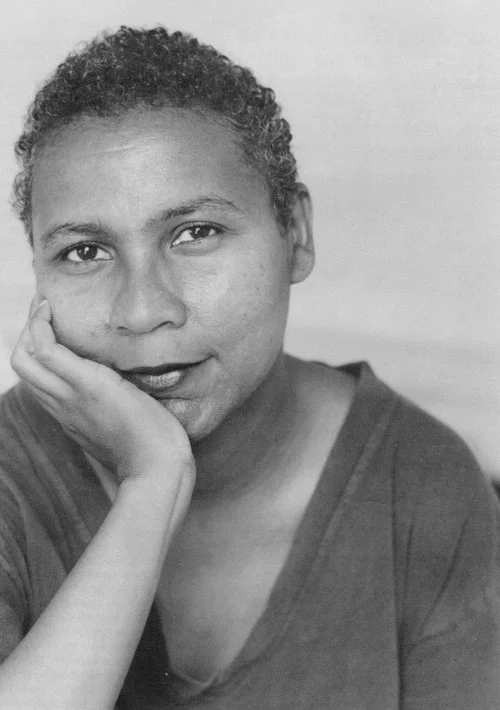
X’s philosophical perspective was as a north star for luminaries such as bell hooks, who frequently invoked “new eyes” as an anchor for her ontological framework, starting with 1992’s Black Looks:
“It is only as we collectively change the way we look at ourselves and the world that we can change how we are seen. In this process, we seek to create a world where everyone can look at blackness, and black people, with new eyes.”
For generations, Black writers, critics, archivists, and thinkers have shaped the way we understand music, film, politics, style, and the world itself, working inside institutions that either undervalue them or erase them altogether. From the inception of Black Studies to the Harlem Renaissance, Black Arts Movement and beyond, the labor of generating and preserving Black cultural criticism has always been treated as secondary.
Consequently, there is a shortage of Black cultural infrastructure. The institutions that have historically held cultural criticism together have been hollowed out, consolidated, or collapsed altogether; what remains is often a paltry facsimile of the archives that once existed, as tech oligarchs claim the atrophied domains of Black arts archives at will, rendering classic works inaccessible. Despite these overwhelming obstacles, Black cultural workers continue to produce some of the sharpest analyses of this era without the structural support to sustain them. At this juncture, it is critical to our survival, as cultural workers, not just to name what we see, but to build a platform that counters mass historical revision and misinformation.
To see clearly is a discipline of survival, and Black criticism has been one of the many apparatuses where that must be practiced, as it is not only one of the most accessible modalities to learn to read the social conditions around us beyond mere products of consumption and entertainment, but as improvisational and expansive as Black culture itself.